
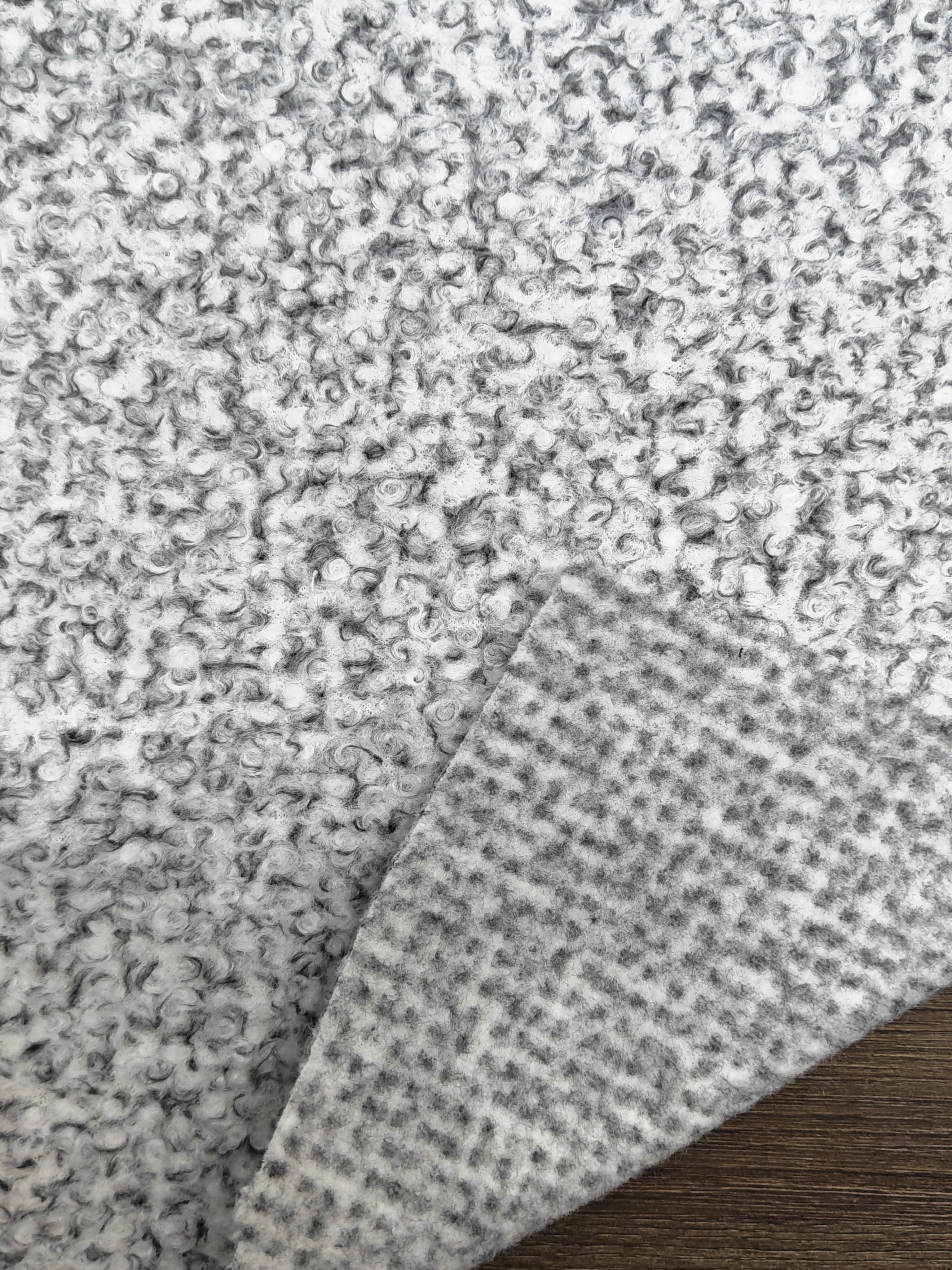
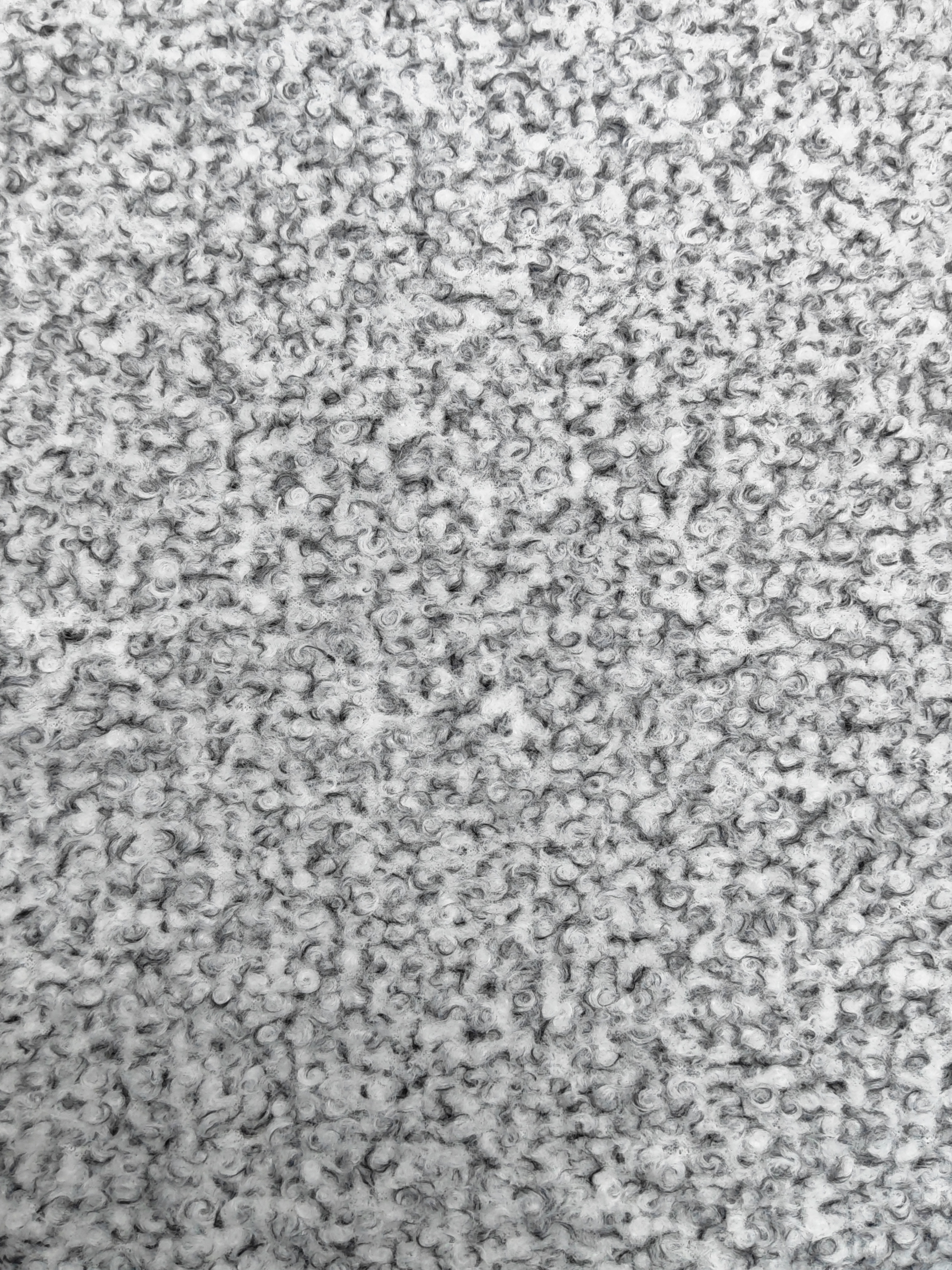
15 Years Professional Curly Wool Fabric Manufacturing for Premium Boucle Fabric
 |
|
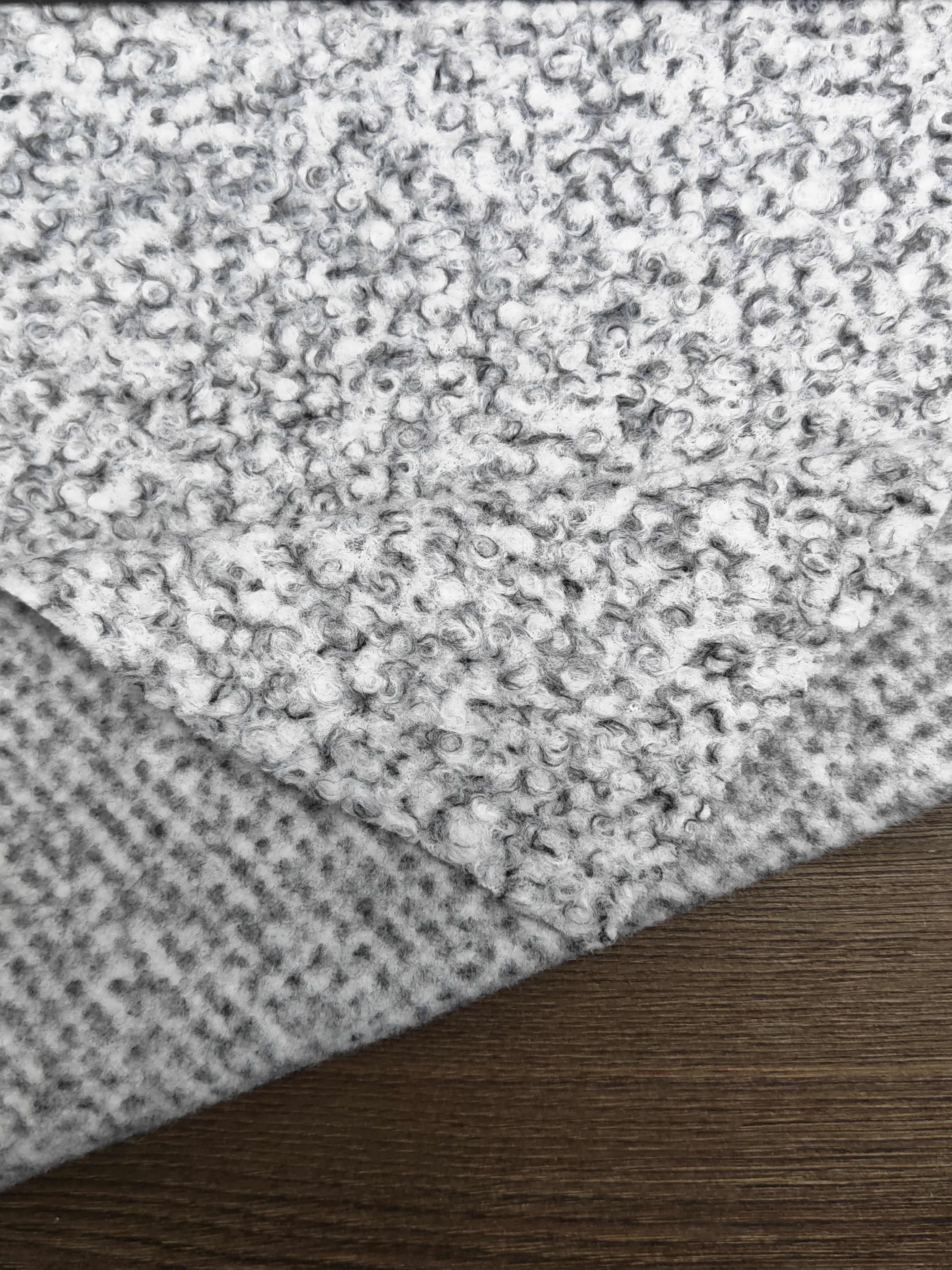
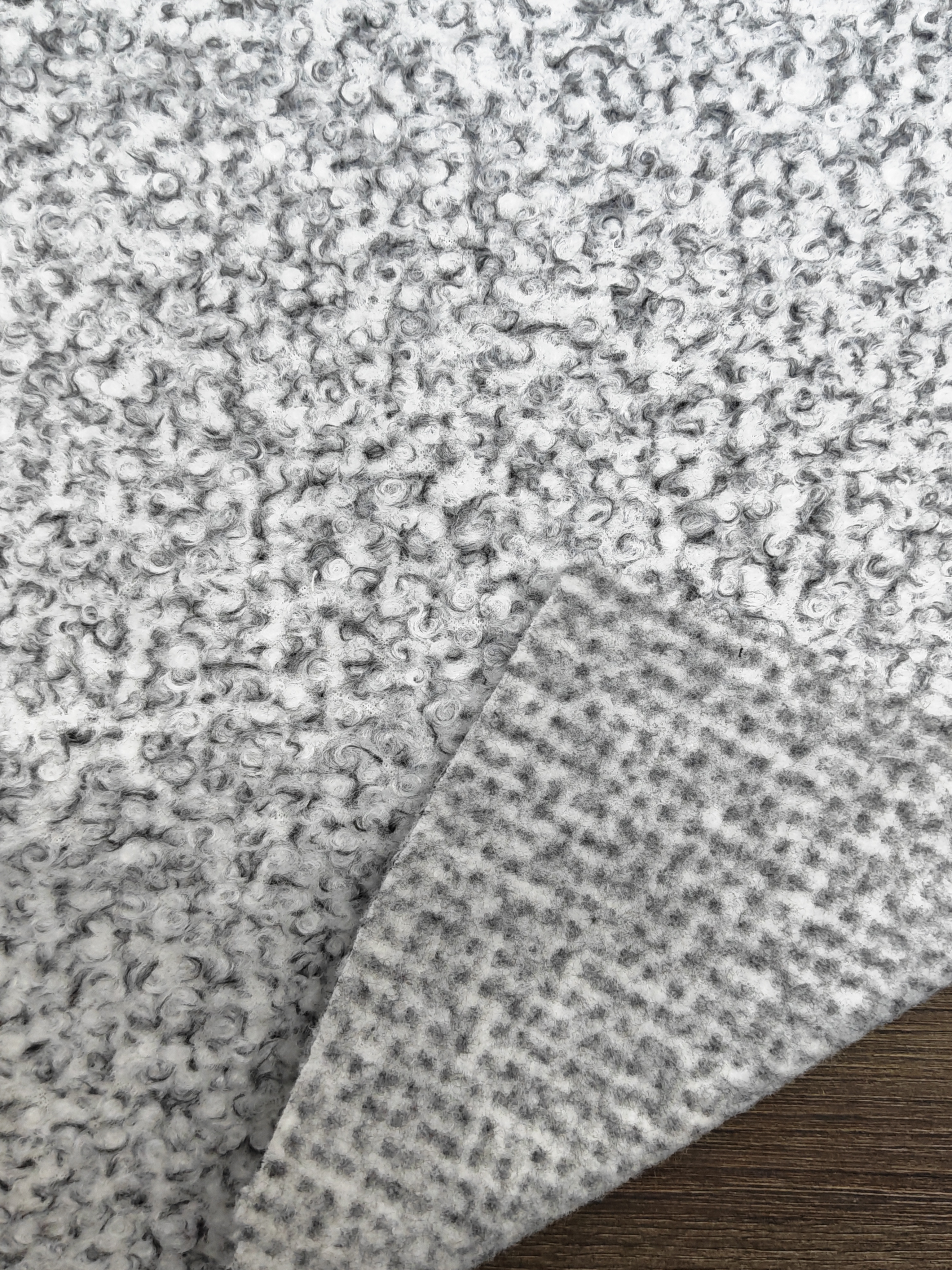
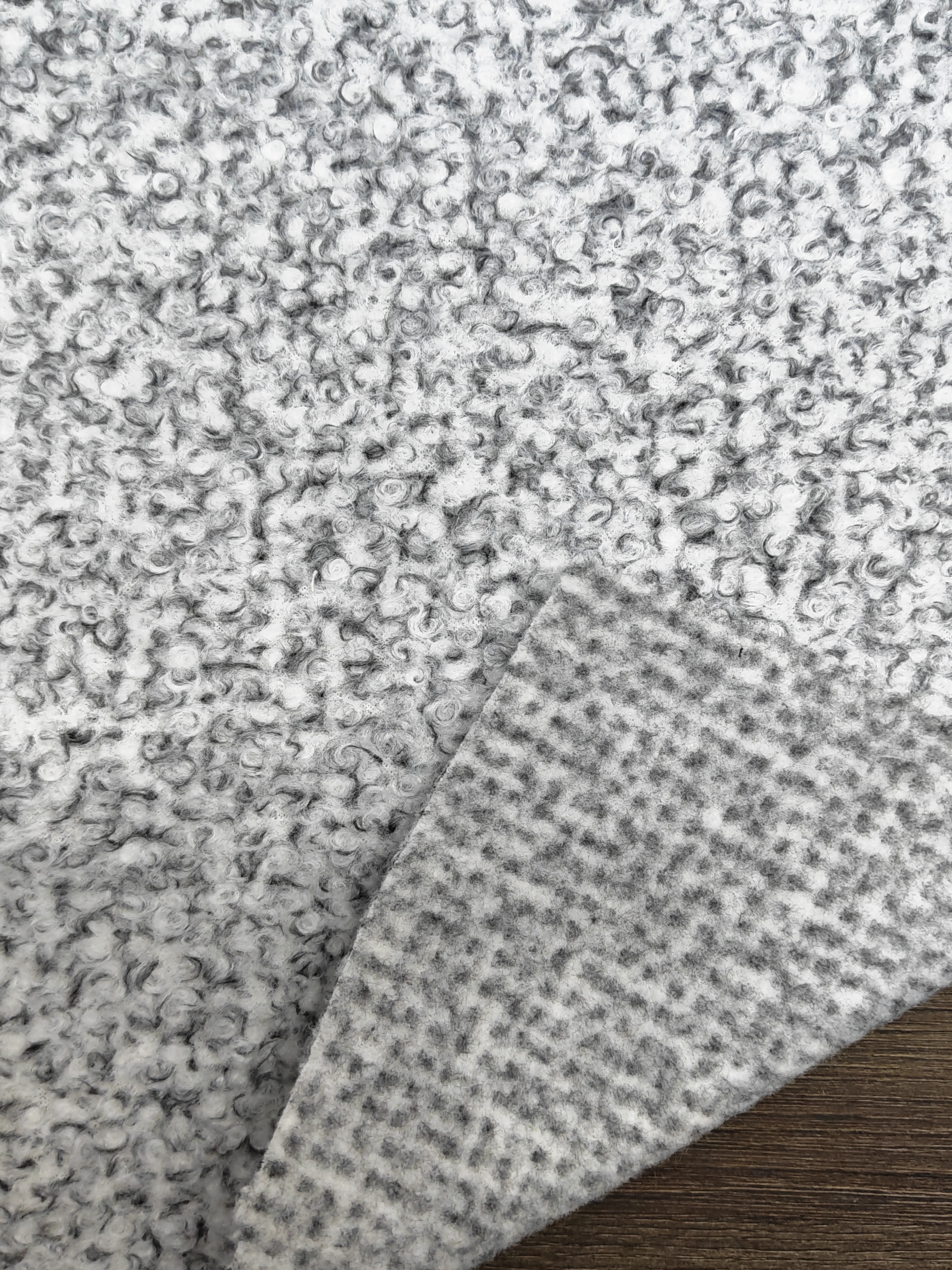
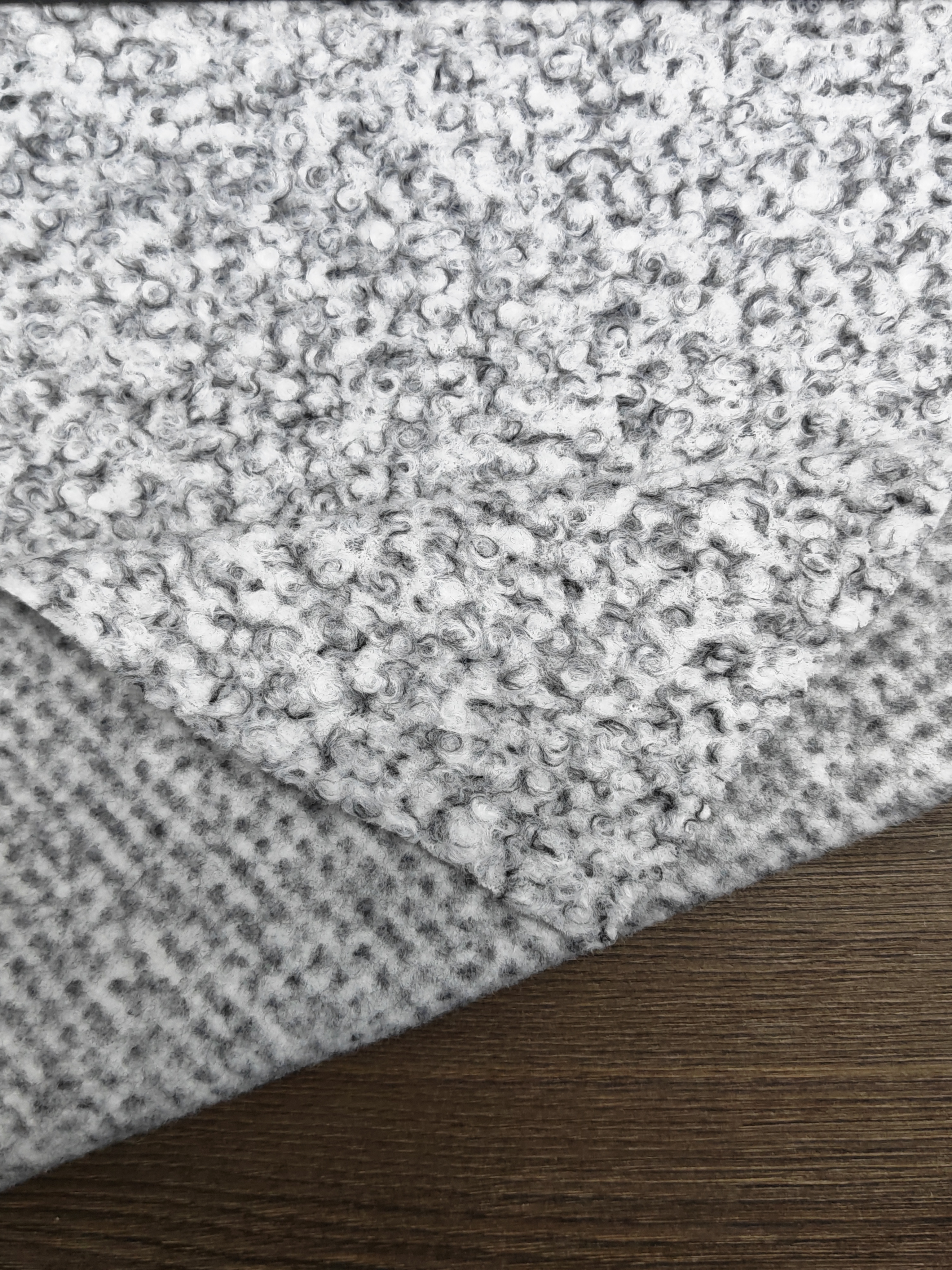
| Item No.: | VT25060455 |
| Comp.: | 100%Polyester |
| Weight: | 350GSM |
| Width: | 150CM |
15 Years Professional Curly Wool Fabric Manufacturing for Premium Boucle Fabric
Curly wool has long been a preferred raw material for bouclé textiles, prized for its natural crimp and resilience. Among the various fiber options used to create looped surfaces, curly wool offers a balance of softness and shape retention that synthetic blends often struggle to replicate.
Why Curly Wool Suits Bouclé Construction
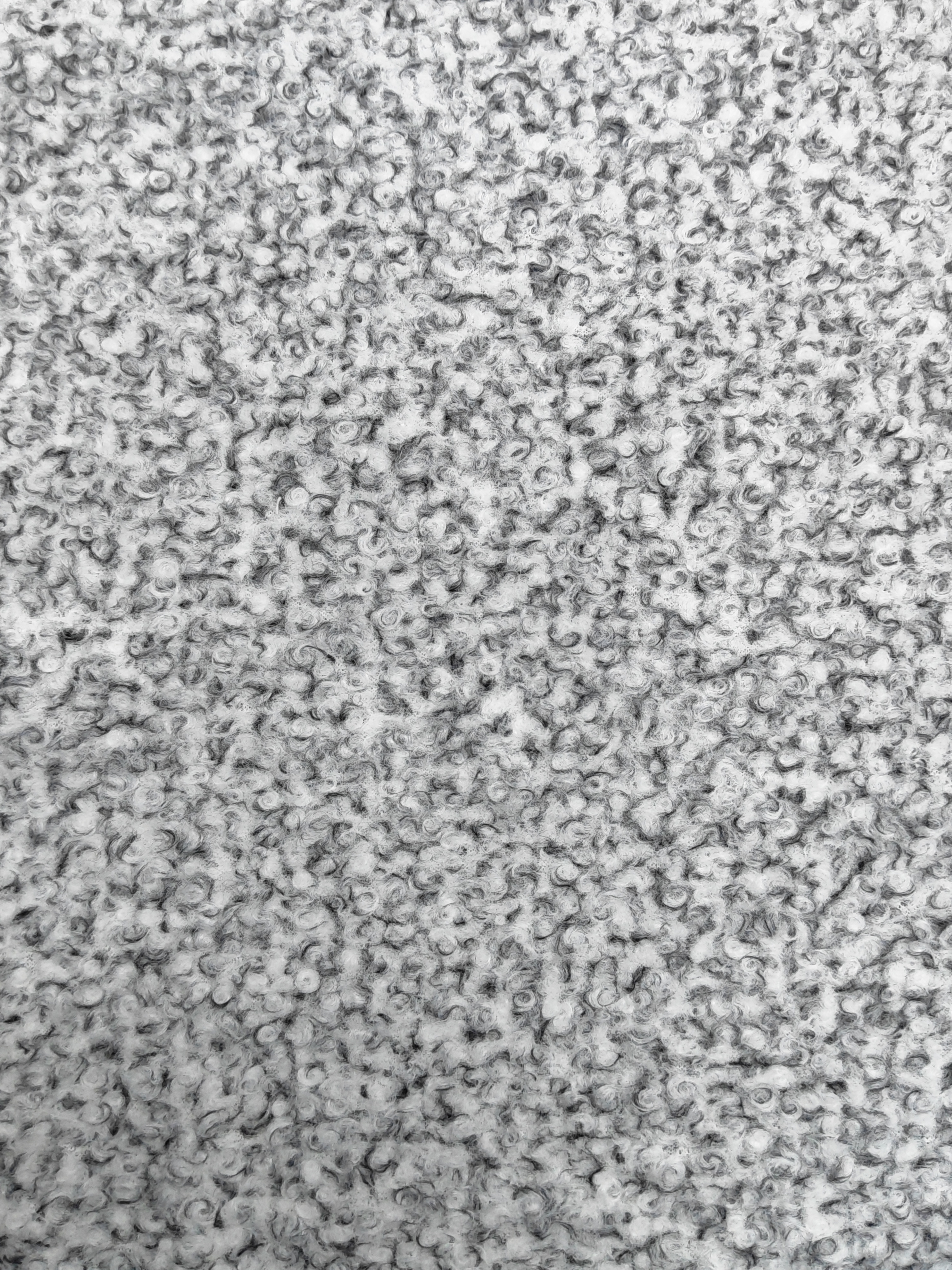
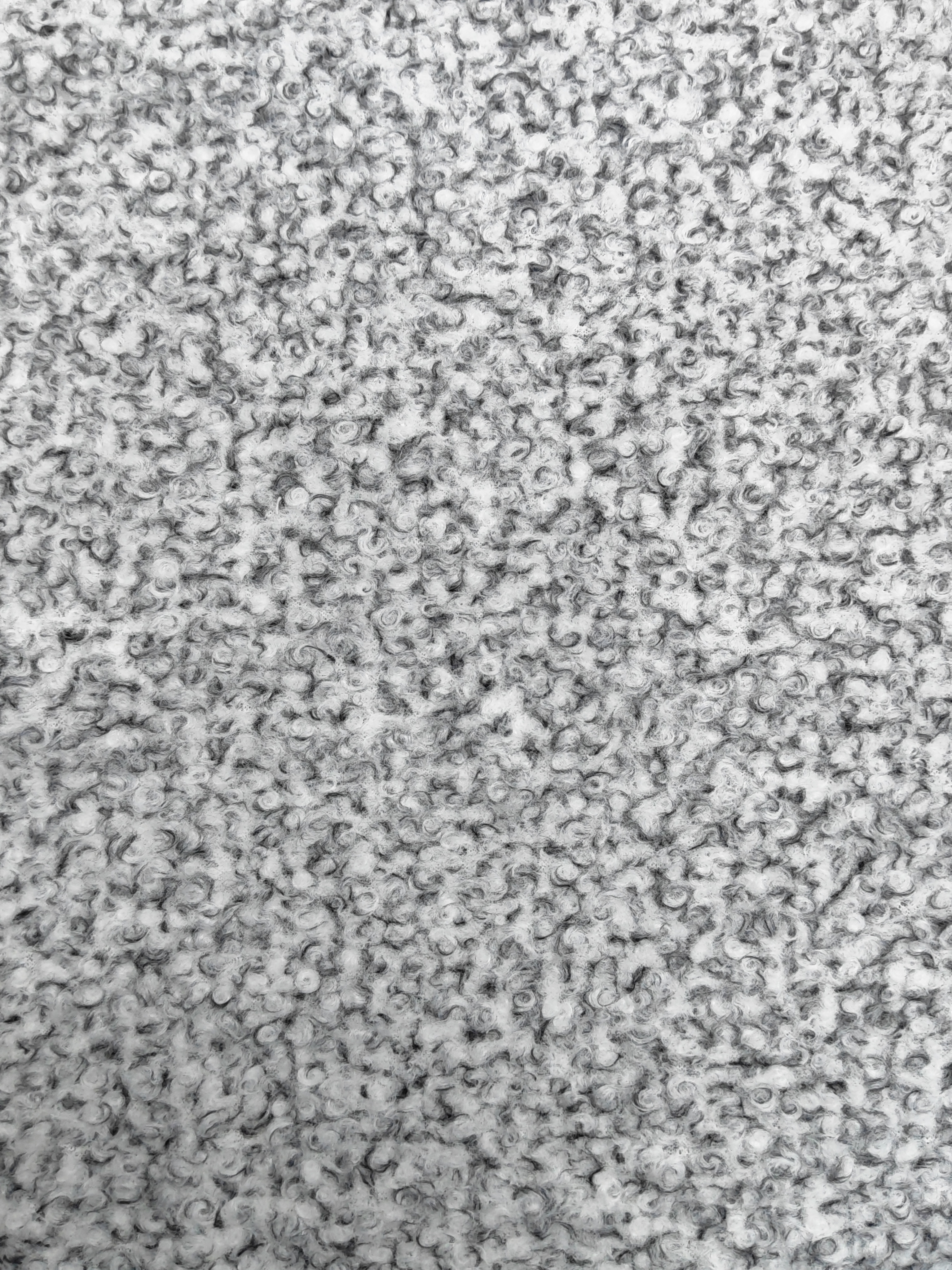
The defining characteristic of bouclé fabric lies in its looped yarn structure, where one yarn (the effect yarn) is fed at a different tension than the ground yarn, creating small curls or loops across the surface. Curly wool—by virtue of its inherent waviness—takes to this process more readily than straight fibers. The natural crimp helps the loops hold their form through weaving, finishing, and subsequent garment manufacturing.
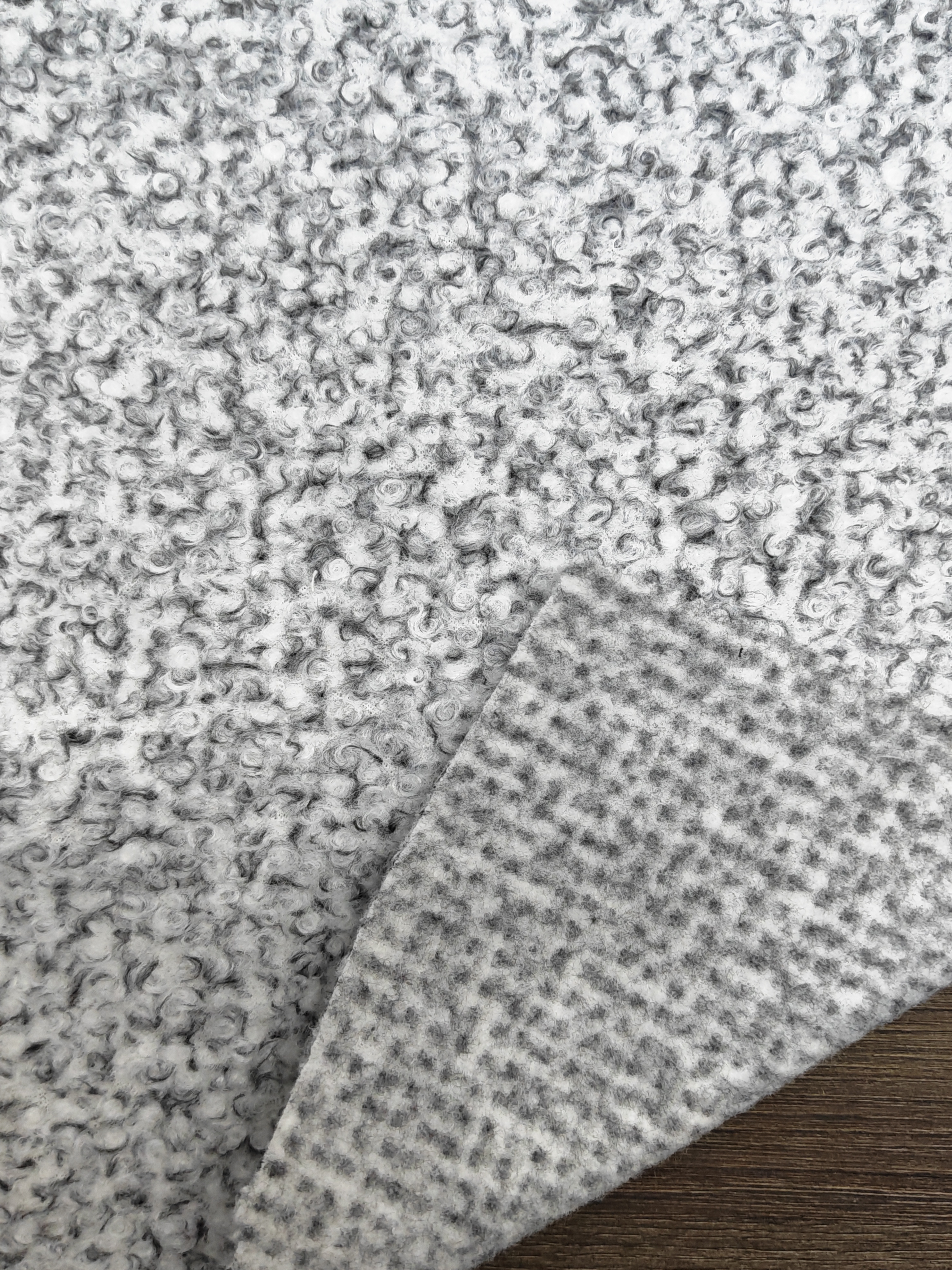
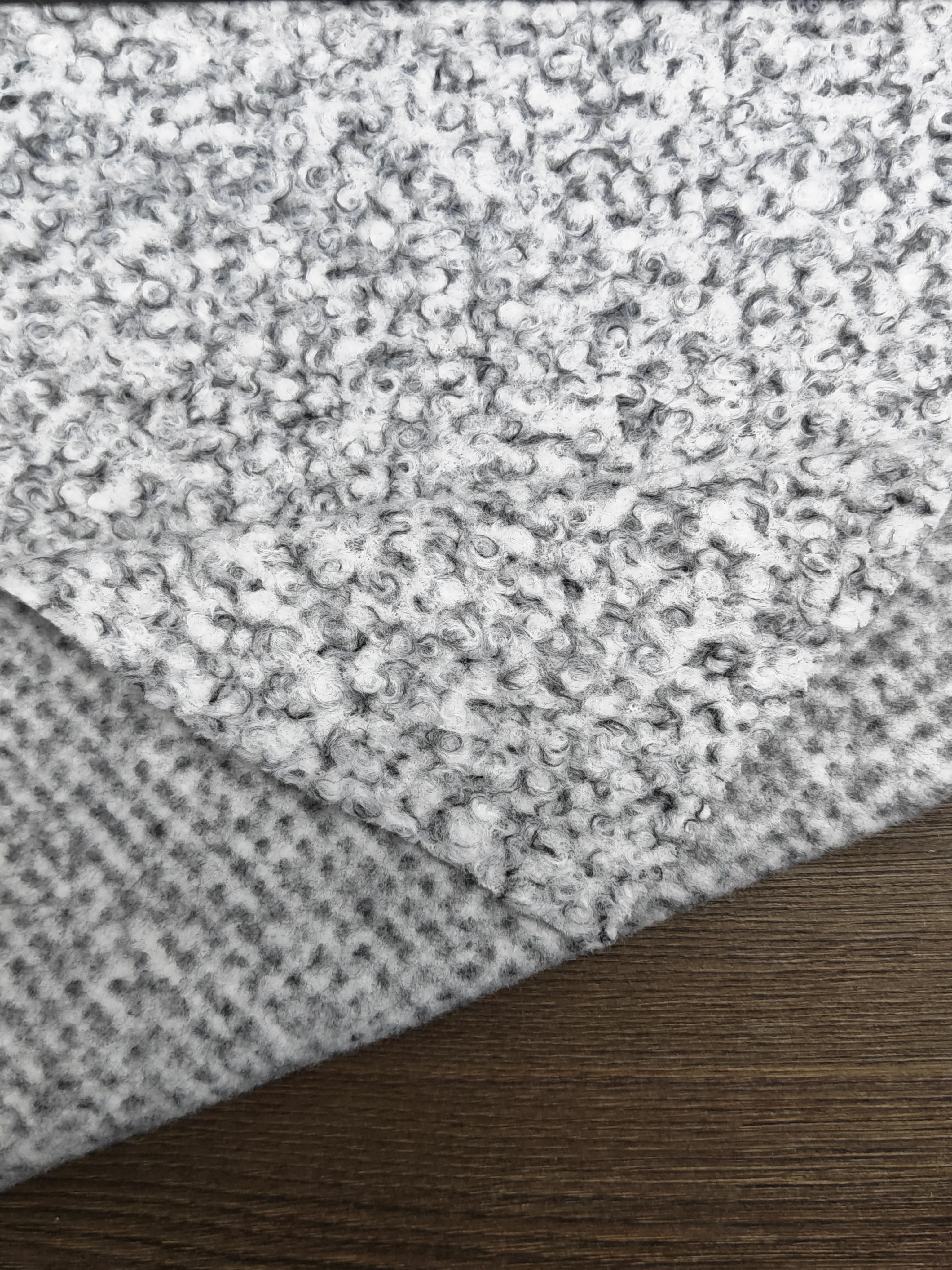
Not all curly wool performs identically. Fiber diameter (measured in microns), staple length, and the number of crimps per unit length directly affect the final fabric’s hand feel and pilling tendency. For premium bouclé applications, manufacturers typically specify wool in the 24–28 micron range: fine enough for a soft touch against the skin but robust enough to withstand the abrasion that occurs on coat collars and cuffs.
Manufacturing Parameters That Define Quality
Experienced producers—such as Hangzhou Vogue Textile Co.,Ltd—have refined their process controls over more than a decade of curly wool production. Key variables include:
Twist level of the effect yarn. A lower twist allows more pronounced loops but increases snagging risk. A higher twist tightens the loops, producing a more structured surface suited for tailored coats.
Take-up speed during winding. Uneven tension creates irregular loop heights, visible as patchy textures. Consistent tension requires calibrated machinery and regular operator checks—a detail that separates commodity production from premium output.
Finishing treatments. Scouring removes natural oils without felting the wool; setting fixes loop geometry under controlled heat and moisture. Some grades receive a light anti-pill resin, though overly aggressive chemical treatment can deaden the fabric’s natural bounce.
Common Defects and Their Root Causes
Even with quality controls, curly wool bouclé presents unique challnges. Uneven loop distribution often traces back to inconsistent yarn tension at the creel. Excessive fuzzing—where short fibers break through the loop surface—usually indicates either low-twist yarn or insufficient waxing during spinning. A less obvious issue is “loop migration,” where loops shift laterally after finishing, exposing ground yarn and creating bald spots. Mitigating this requires balanced fabric sett (ends and picks per inch) and adequate weft tension during weaving.
Application Scope for Premium Bouclé
Curly wool bouclé fabrics fall into three weight categories for winter outerwear:
Lightweight (280–350 gsm) – Used for lined jacket shells and women’s cropped coats. These rely on a finer effect yarn and tighter loops to prevent excessive drape.
Midweight (350–450 gsm) – The most common range for single-breasted coats and car coats. Provides enough thermal insulation without requiring a separate interlining.
Heavyweight (450–600 gsm) – Reserved for oversized, unstructured outerwear. The high mass can cause loop flattening under its own weight, so manufacturers often add a secondary backing weave for dimensional stability.
Beyond coats, the same fabric appears in premium accessories: collarless cardigans, blanket throws, and even upholstery for high-end hospitality seating, though the latter requires a different abrasion standard (Martindale >40,000 cycles).
Supply Chain Considerations
Buyers sourcing curly wool bouclé from China should evaluate three documentation items routinely overlooked: lot-to-lot shade consistency (dye lots can vary more than with plain weaves due to loop shadowing), shrinkage test results after two domestic machine washes (wool’s tendency to felt is exacerbated by looped surfaces), and packing method—rolls wrapped in poly then kraft paper, not just plastic, to avoid condensation rusting the metal cores.