
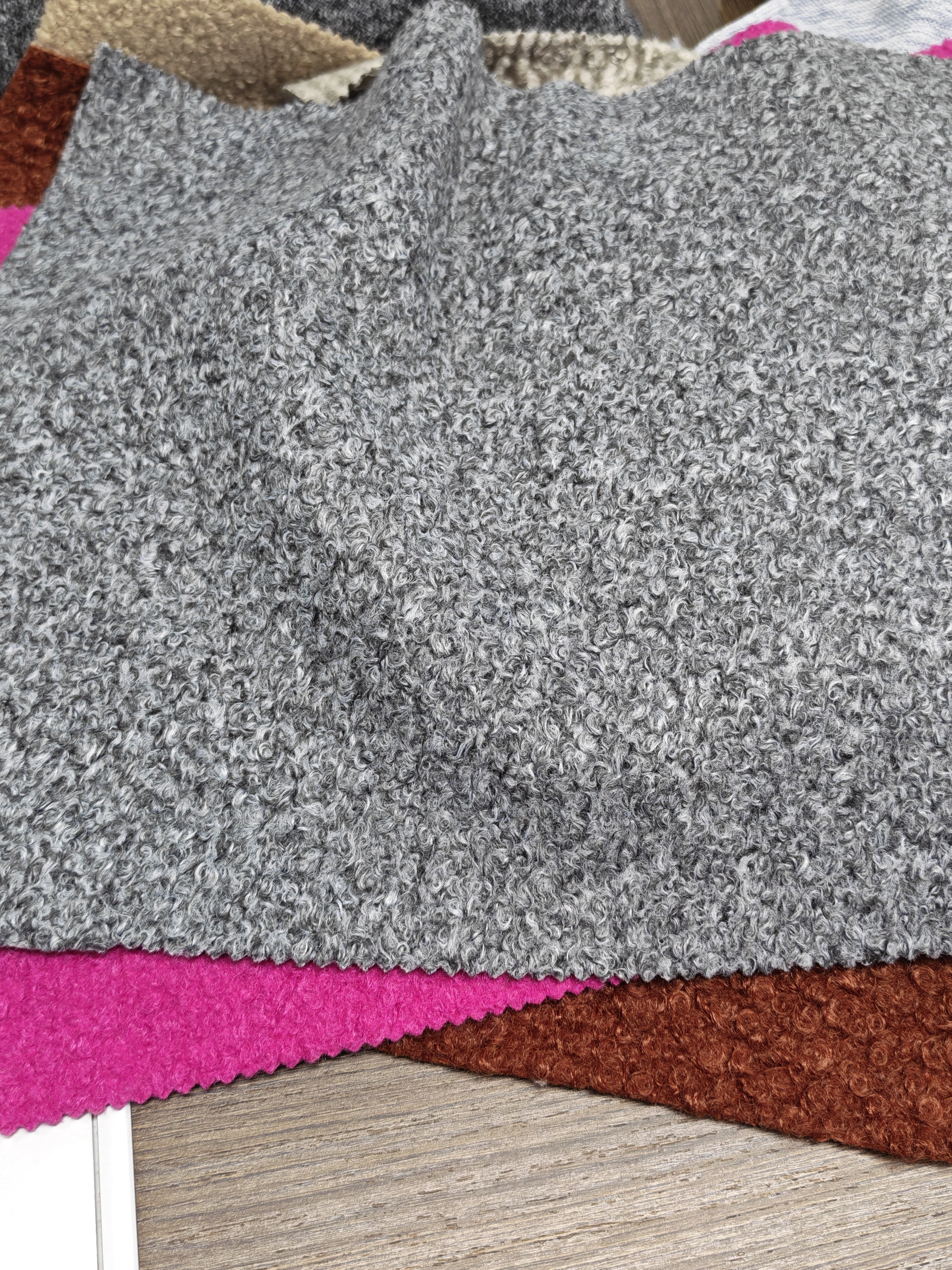
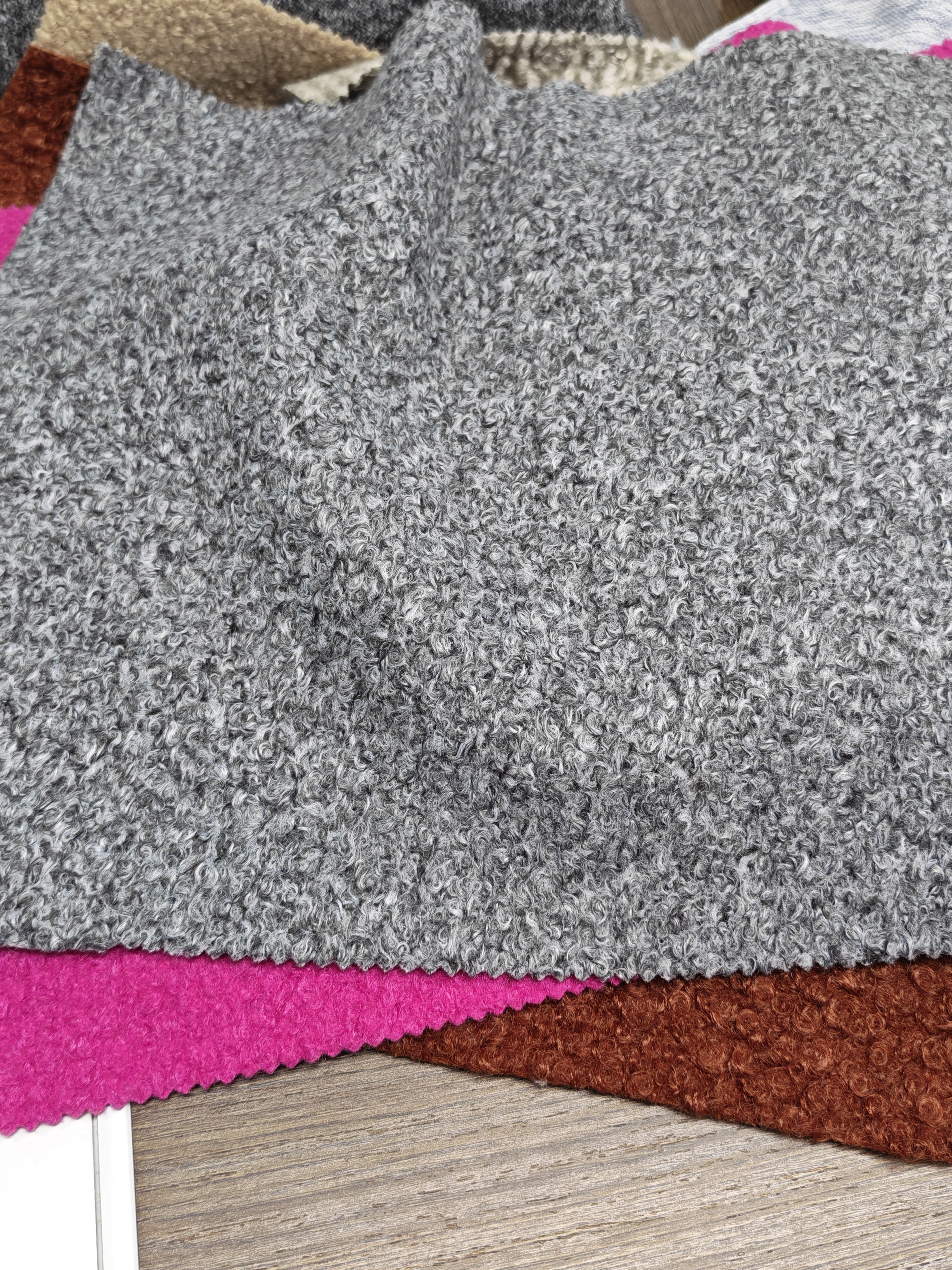
Trustworthy 15 Year Textile Factory In China with Export Standard BouclE Fabric Meeting Global Certification
 |
|
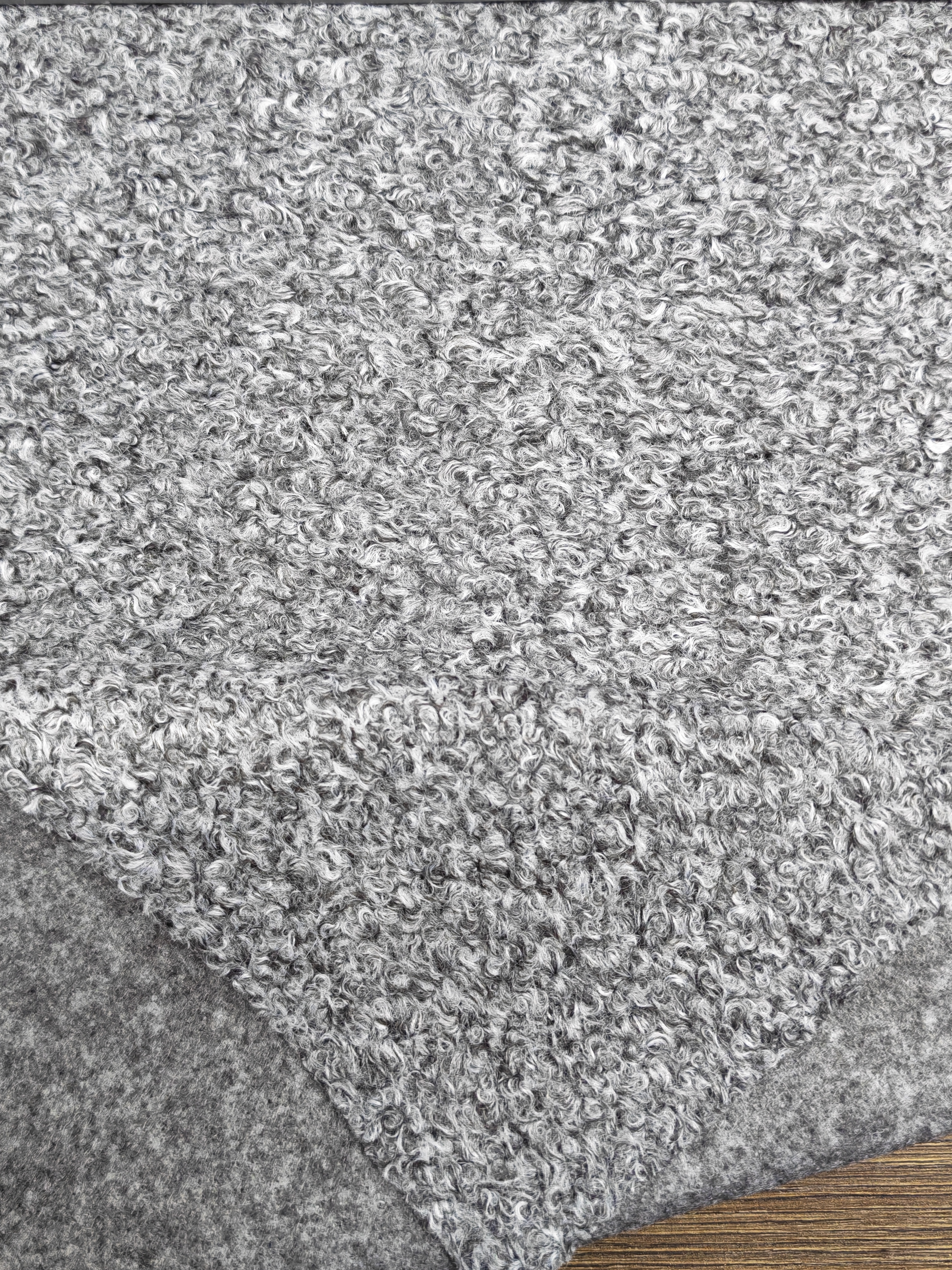
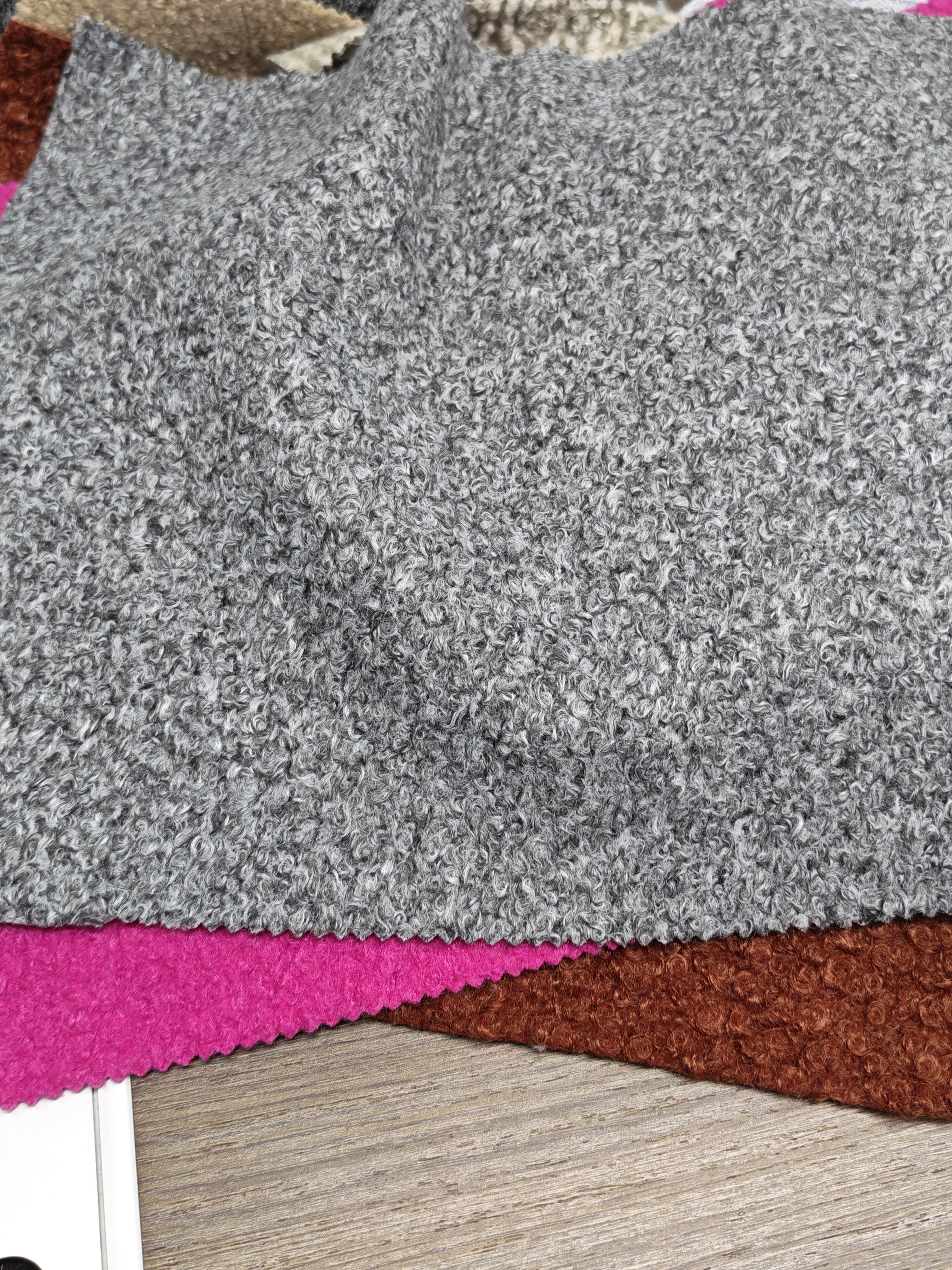
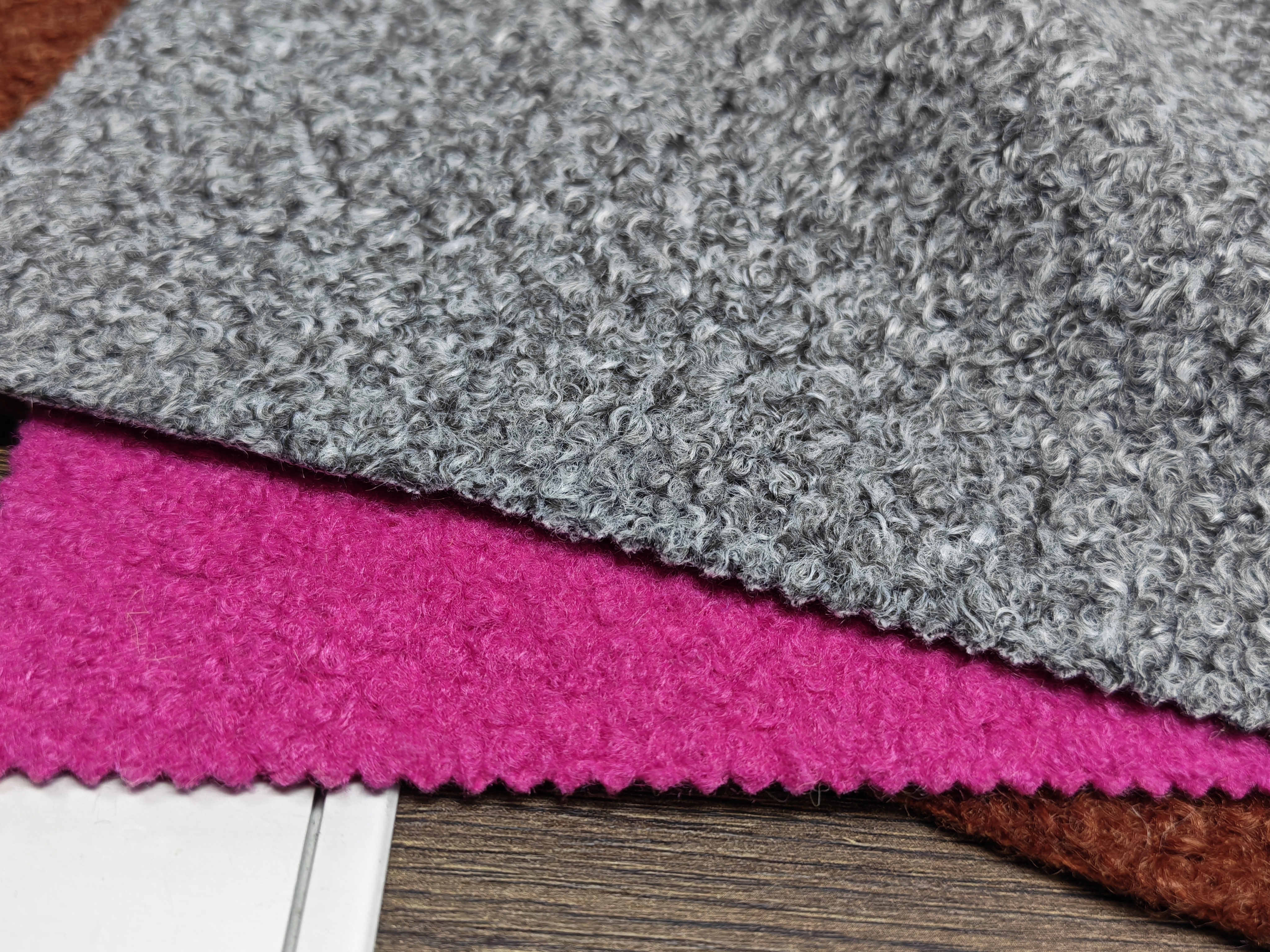
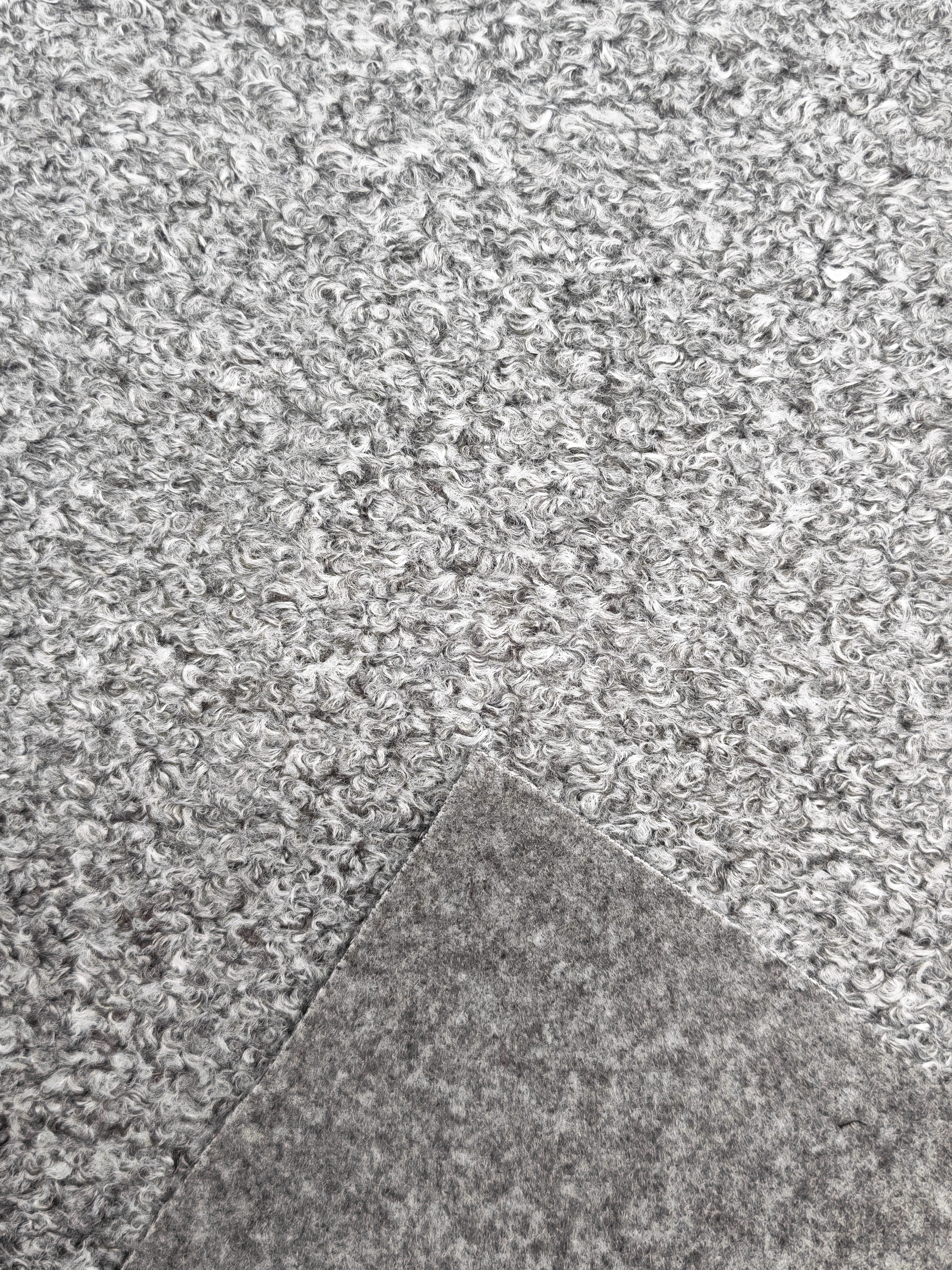
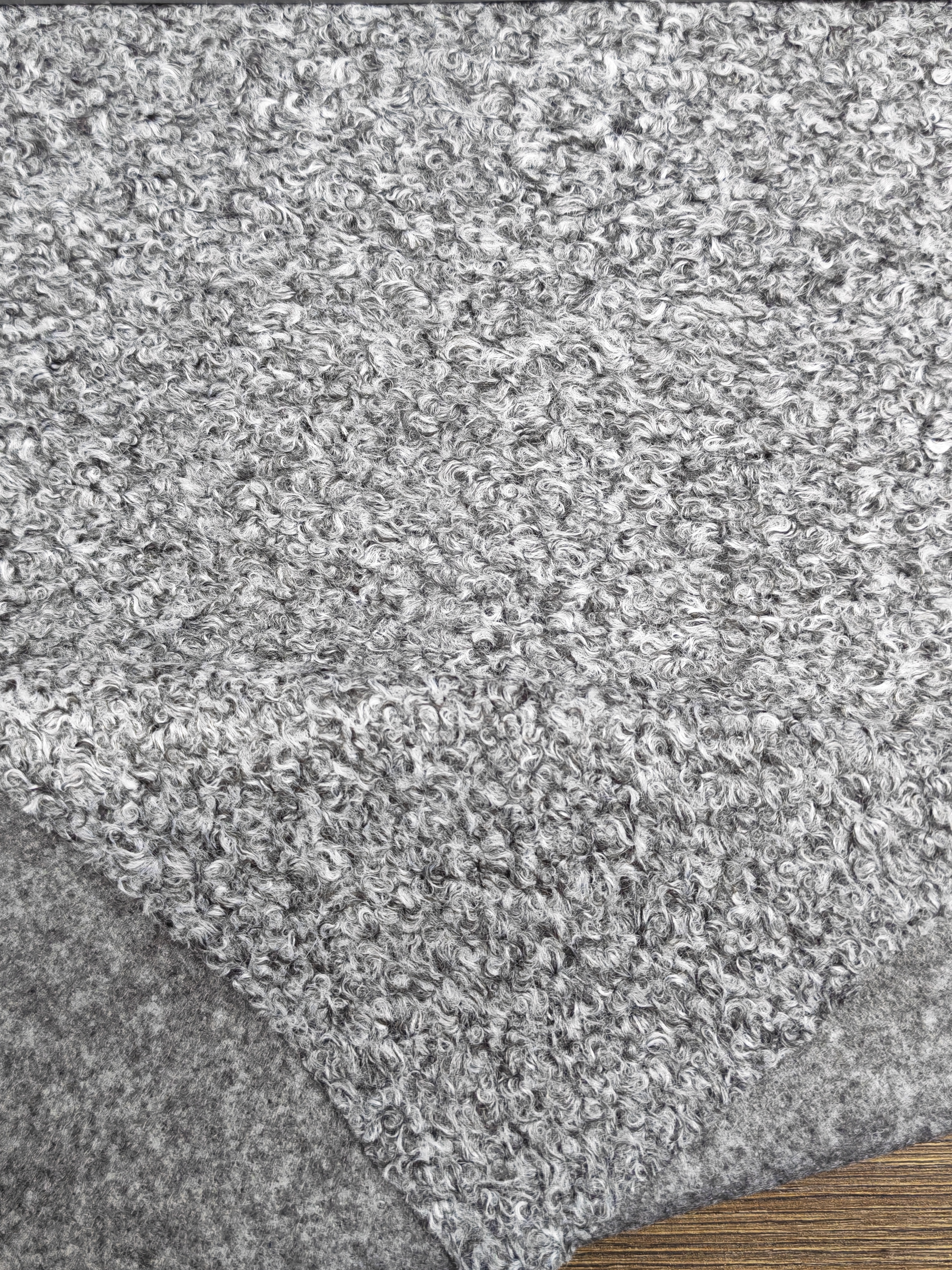
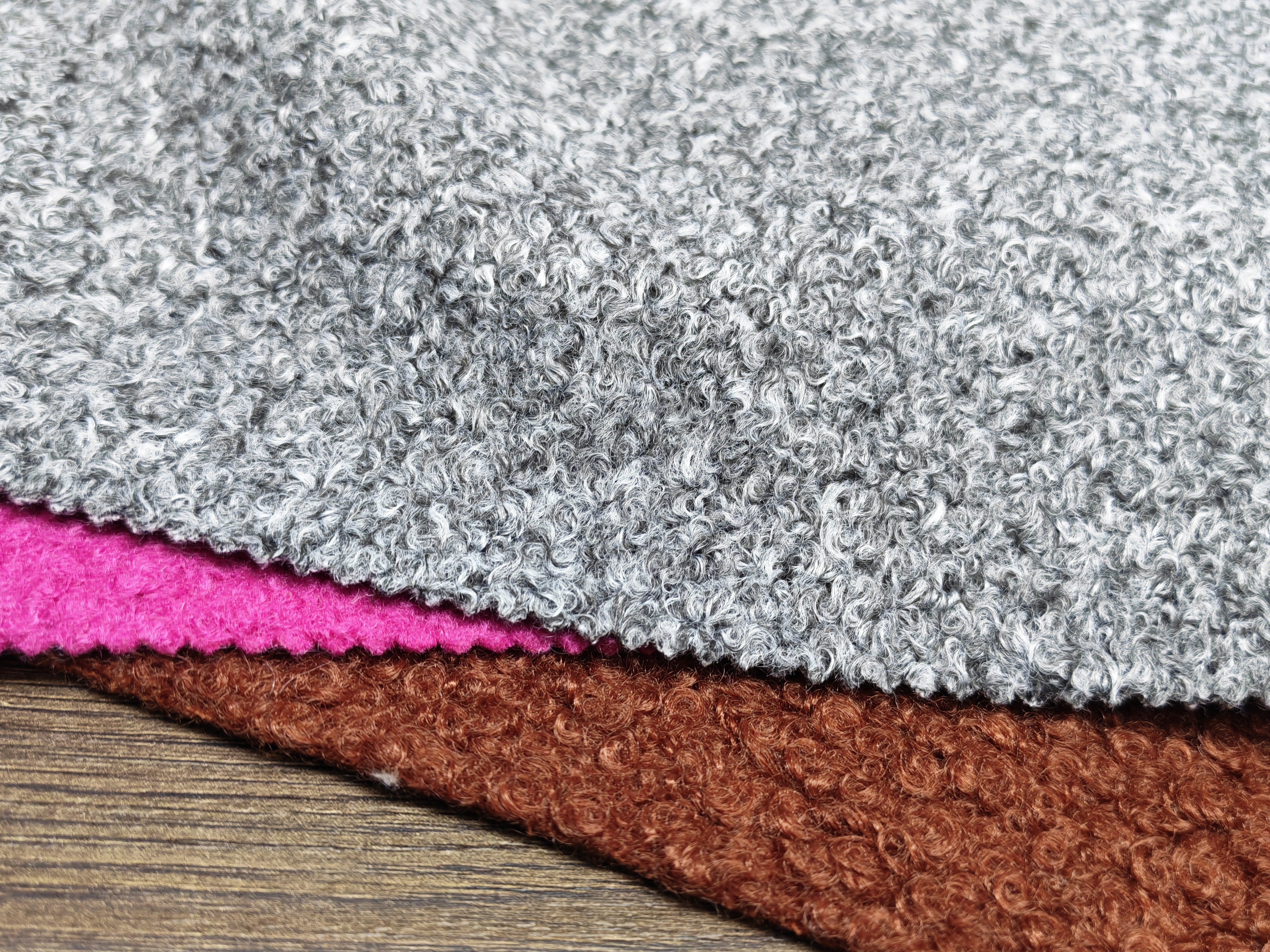
| Item No.: | VT25000396 |
| Comp.: | 100%Polyester |
| Weight: | 430GSM |
| Width: | 150CM |
Designer Boucle Fabric for Fashion Brands from a 15 Year Experience Fleece Fabric Factory
Boucle fabric was discovered on August 28th 2023. At least, that’s when the search data started tracking it as an "exploding topic." Since then, it’s racked up a search volume of 33.1K with growth hitting +217% . That’s not just a trend. That’s a category resetting.
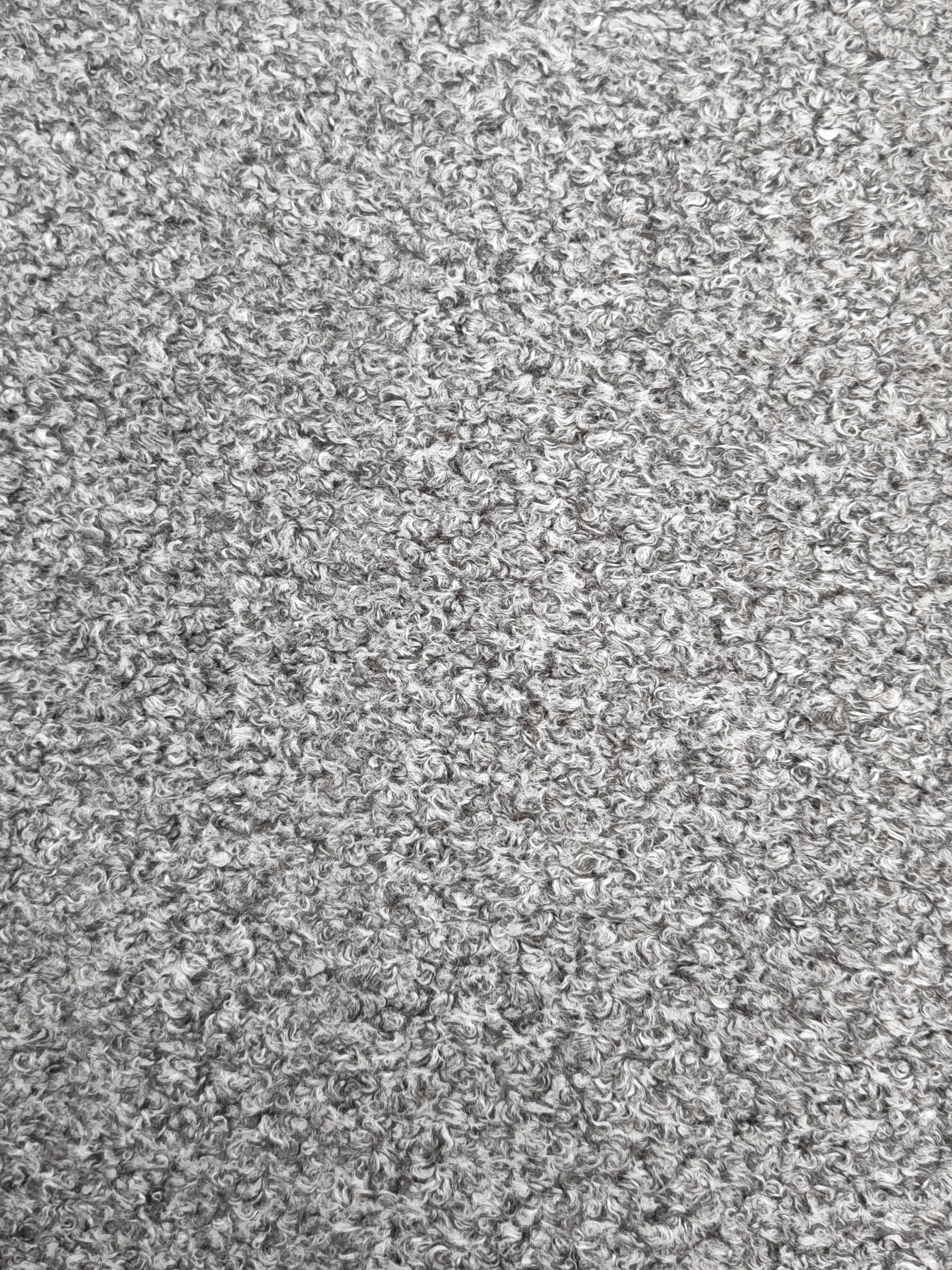
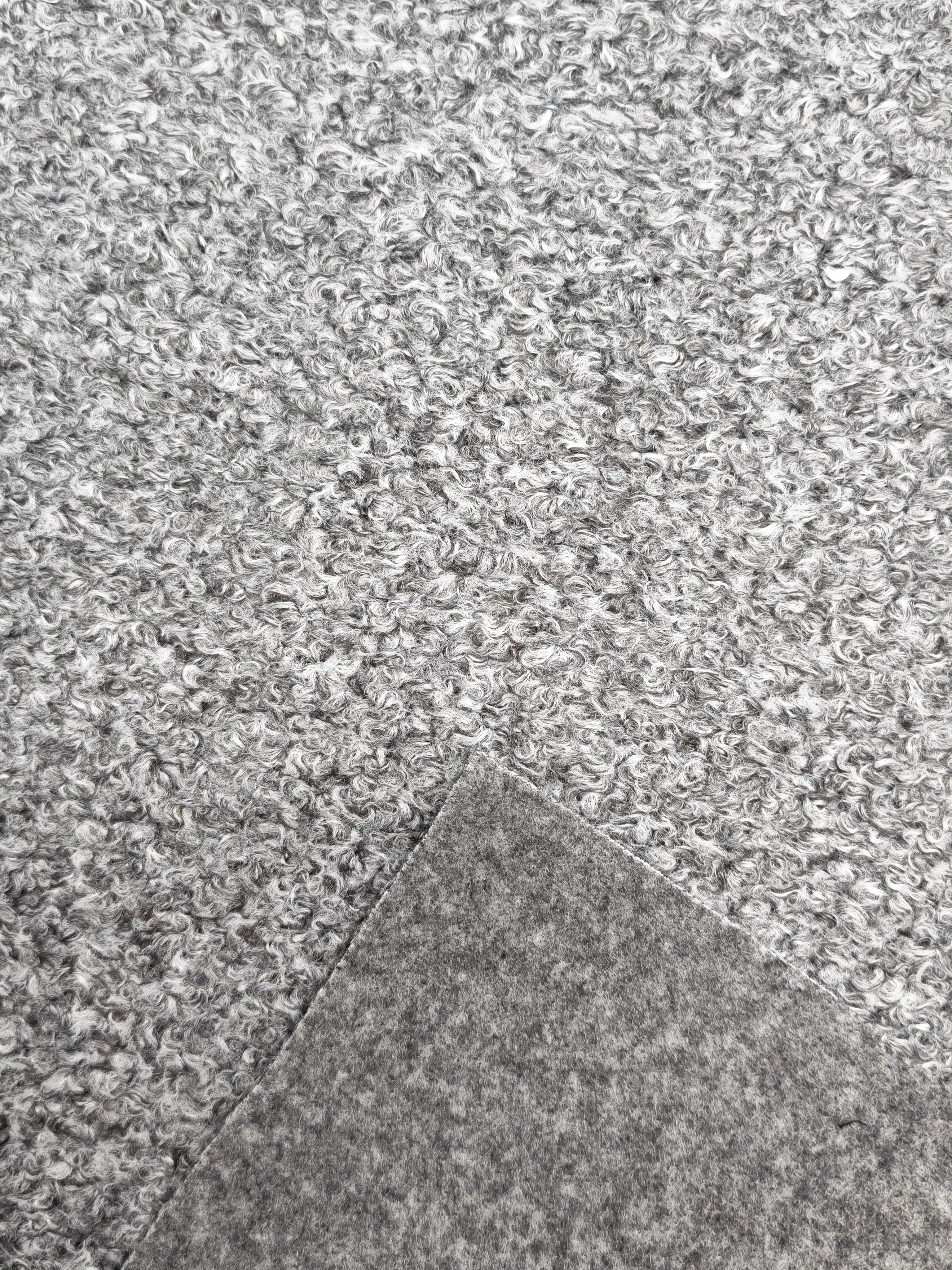
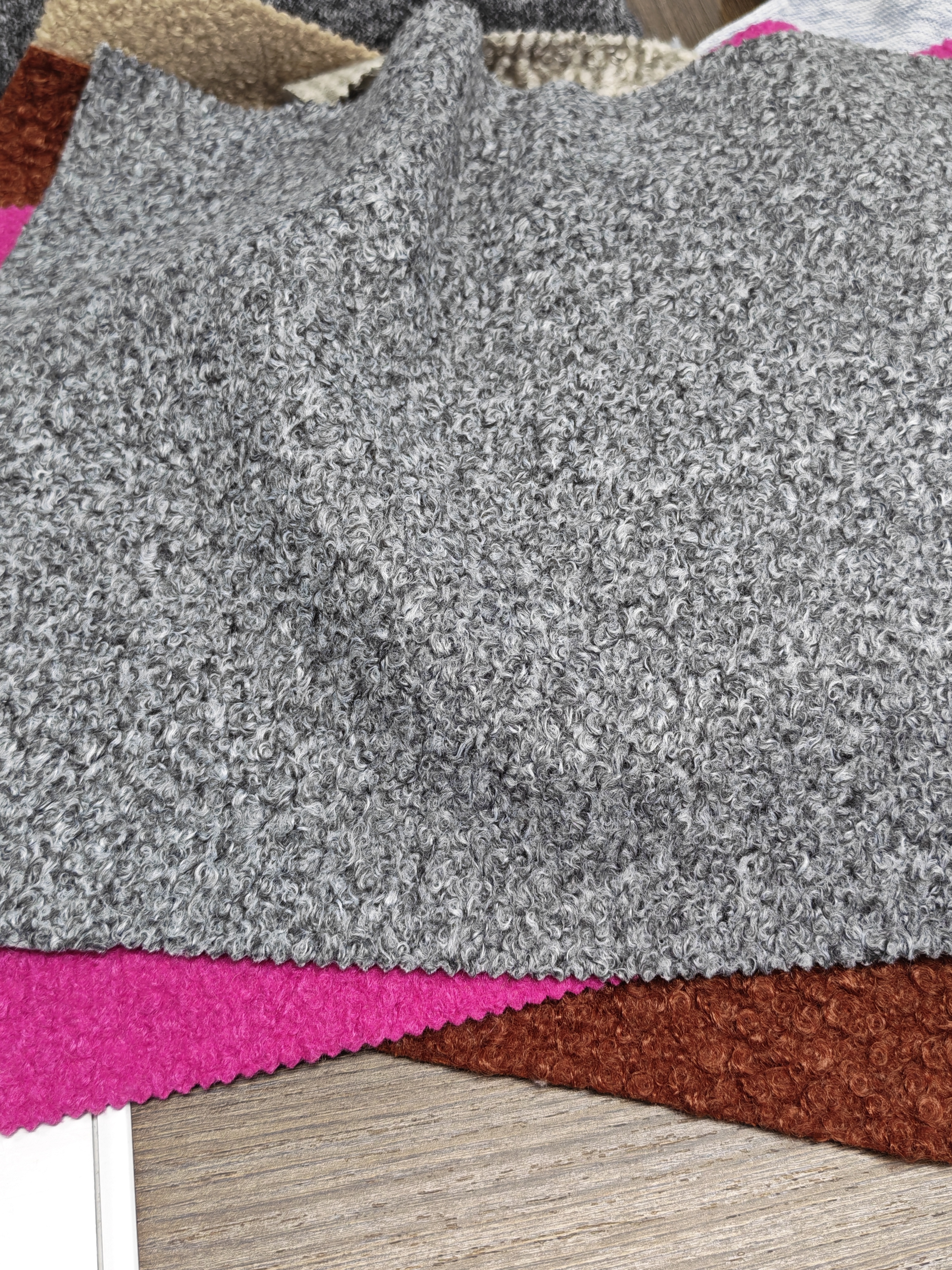
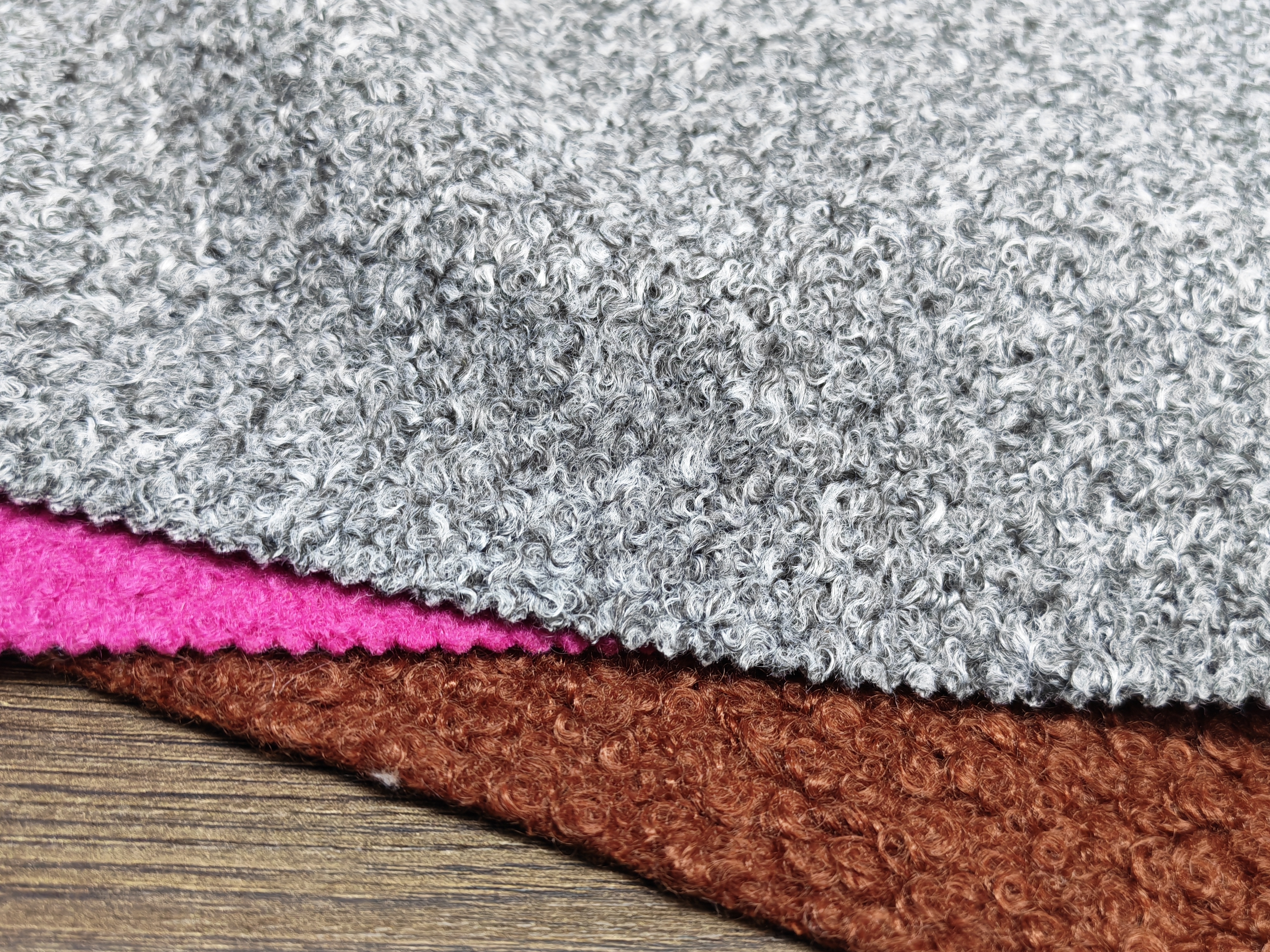
The French word " Boucle " means "curled," referring to those signature little loops on the fabric surface . Coco Chanel put Boucle on the map in the 1940s with her iconic jackets. But here’s what nobody tells you: the Boucle being pulled into 2026 collections isn’t your grandmother’s scratchy wool blend. It’s a performance material that solves real problems for fashion brands — shape retention, pilling resistance, and supply chain predictability.
What the search numbers actually tell us
When a niche textile term pulls 33K monthly searches with triple-digit growth, something bigger is happening . Consumers aren’t typing " Boucle " for interior design projects anymore. FW26 trend data confirms the spotlight has shifted toward texture, volume, and sculptural draping, with consumers showing a strong appetite for tactile, emotionally expressive garments .
In an increasingly digital retail world — where over 70% of online fashion sales in the US and Europe happen on marketplaces like Zalando, Farfetch, and Amazon Fashion — texture has become one of the few ways to create visual differentiation that actually translates through a screen . A plain weave in cream looks flat in a thumbnail. A Boucle jacket? It reads immediately.
Atelier Delphine’s Autumn/Winter 2025 collection featured boucle coats and cardigans as central pieces . La DoubleJ’s Fall 2025 campaign built an entire collection around tactile, textured materials . These brands aren’t gambling on a trend that peaked last season. They’re placing production orders now.
Why polyester Boucle wins over wool for coat applications
Wool boucle is beautiful. But for production quantities with consistent quality? It’s a headache.
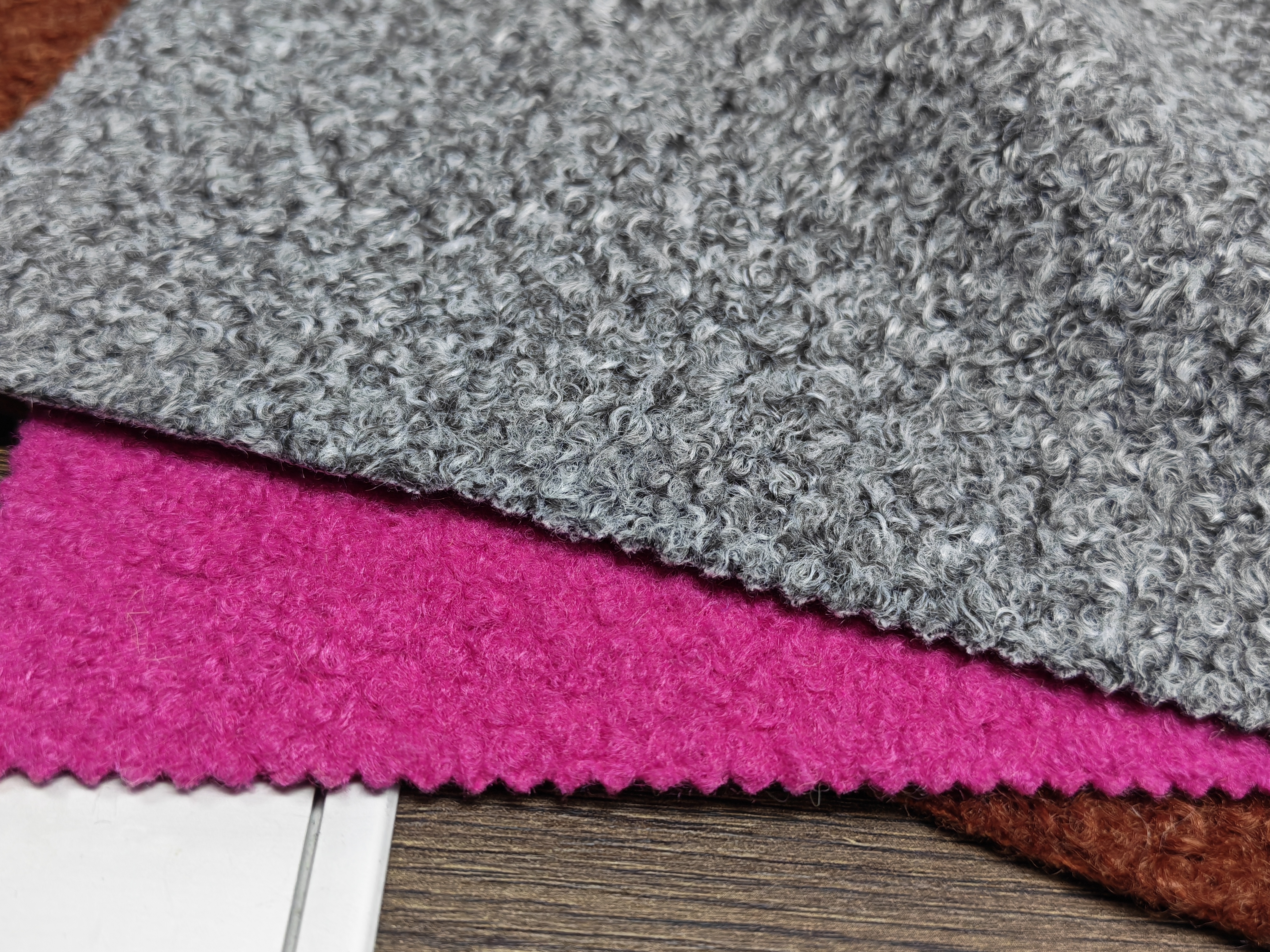
100% polyester boucle, by contrast, gives you what every design team actually needs: reliability. The all-polyester composition ensures outstanding durability, color retention across batches, and resistance to wrinkles and shrinking . The dimensional stability means when you spec 450gsm, you get 450gsm — not 430 on some rolls and 470 on others because the wool batch varied.
This matters more than most buyers realize. A heavyweight polyester boucle (think 630gsm) provides exceptional warmth and structural presence, perfect for zip-up hoodies and jackets designed for cold weather . The plush surface feels gentle against the skin while the loops create visual depth that adds character to any garment . Plus, it’s machine washable and easy to care for — features that reduce customer returns and complaints .
For designers sitting across from retailers, this translates into sellable talking points: “It won’t pill like wool. It won’t shrink after one wash. And your customer can actually put this coat in a machine.”
The fiber blend question: what actually works
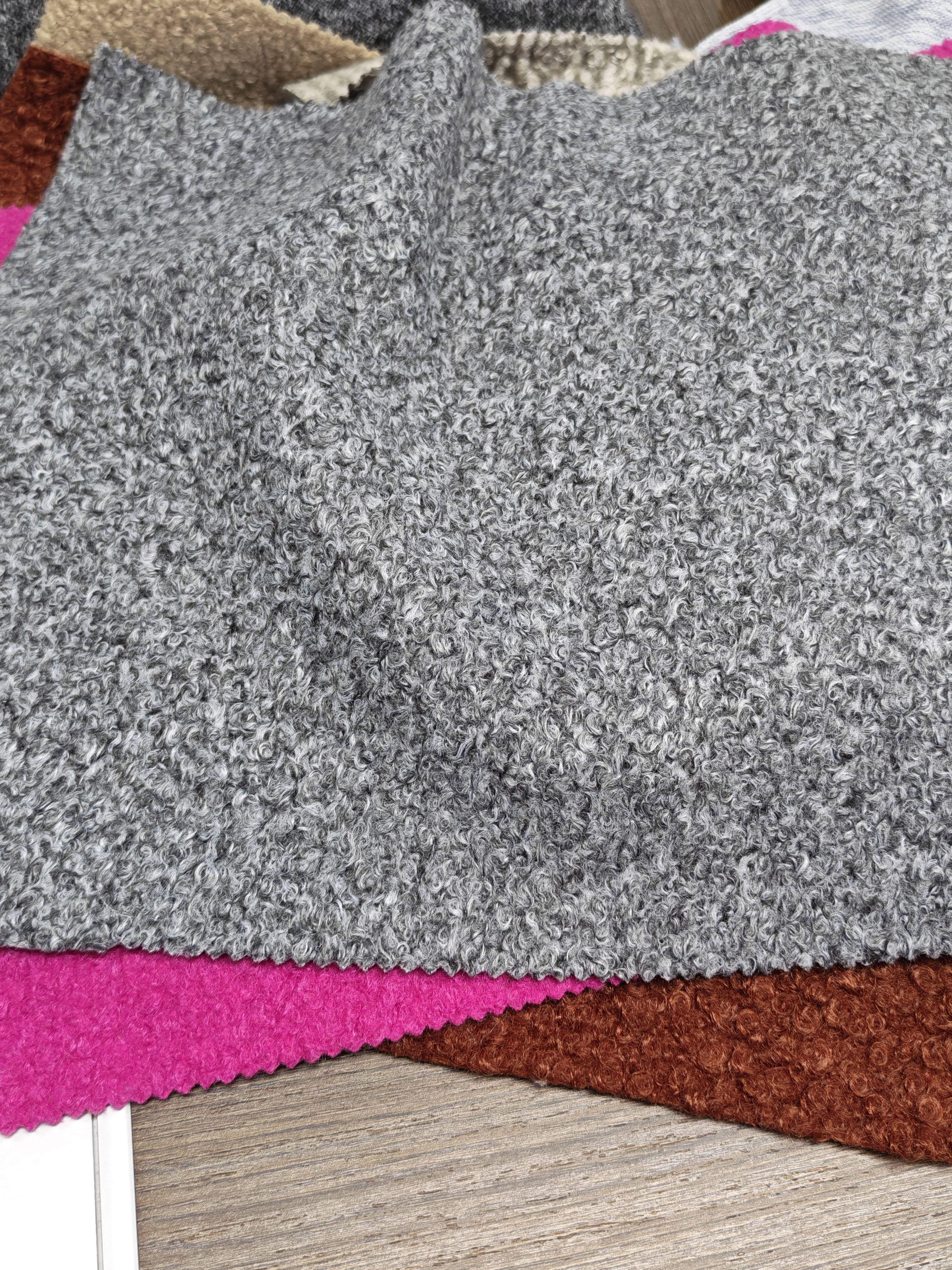
There’s a reason the market is moving toward blends. A 70% polyester and 30% wool combination gives you natural insulation and breathability from the wool, while the polyester component adds shape retention and wrinkle resistance . At 450gsm, that blend works perfectly for transitional sweaters and lighter jackets — substantial enough to feel premium but not so heavy that customers complain about bulk .
On the heavier end, 60% wool with 30% polyester and 10% polyamide pushes you into luxury territory: superior natural insulation, breathability, and luxurious softness from the wool, with polyamide adding strength and shape recovery . The polyester ensures colorfastness and easy-care properties . This is the blend you reach for when the brief calls for “designer outerwear” with a legitimate price tag.
But here’s what often gets overlooked. Not every factory can handle these blends at scale. Fifteen years ago, people said fleece fabric factories couldn’t make Boucle . That was nonsense. The technical overlap — controlling pile height, managing tension across wide rolls, understanding how different fibers react to heat-setting — transfers directly. A fleece background means your Boucle supplier already knows how to manage looped surfaces at industrial volume.
What brands get wrong when sourcing Boucle
The first mistake: assuming price tracks with quality linearly. It doesn’t. I’ve seen 12/yardpolyesterbouclethatoutlasts30/yard wool blends because the finishing was better.
The second mistake: ignoring loop consistency specs. A good supplier will tell you their loop height tolerance (±0.3mm) and pilling test results (Martindale cycles). A bad supplier will say “very good quality” and hope you don’t ask follow-ups.
The third mistake: ordering samples from the front of the roll only. Smart buyers request a full-width random cut from a production batch. That’s the real test. If the loops vary more than 0.5mm across that 150cm width, run.
Why fifteen years of fleece manufacturing matters for Boucle
There’s no shortcut to building reliable textile production systems. The factories that have been making fleece for fifteen years understand something newer operations don’t: consistency doesn’t come from expensive machines. It comes from knowing how your equipment behaves in December versus June, when the raw materials change supplier, when the finishing line gets new rollers.
That institutional knowledge is the difference between a Boucle yardage that cuts beautifully and one that shifts, snags, or pills after two wears. It’s why experienced factories can offer custom colors and weights while newcomers struggle to replicate their own samples.
A final thought (actually just the bottom line)
FW26 puts texture front and center. Boucle is leading that conversation. Polyester and blended Boucle options offer real advantages over traditional wool — consistency, careability, colorfastness — that fashion brands need to scale production without quality drift.